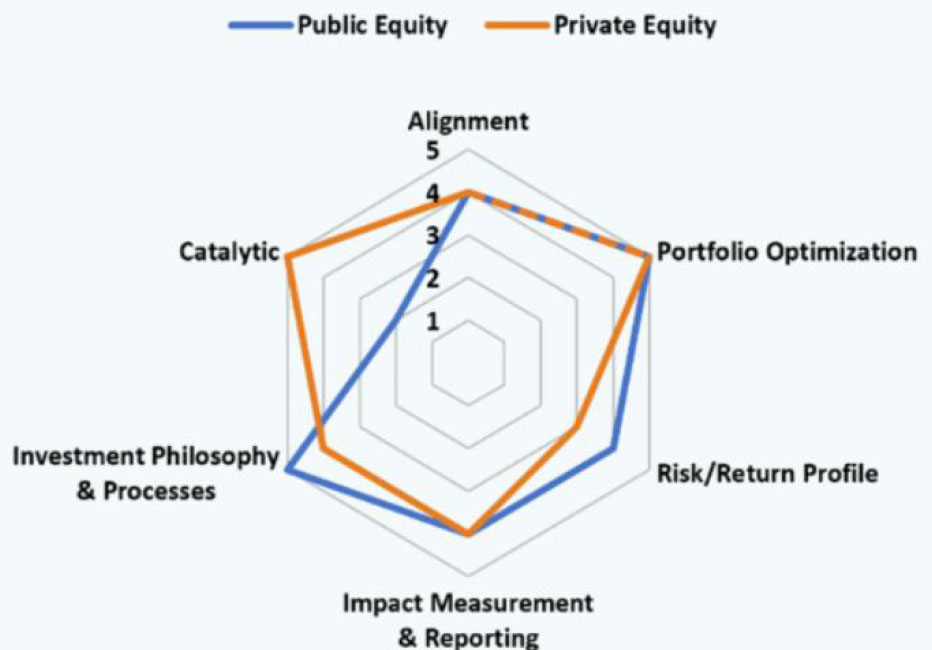
The Foundation’s investment sourcing, due diligence, and management processes have since 2007 balanced social impact and financial considerations. More recently, the Foundation has adapted a framework to evaluate these factors, consisting of the six criteria outlined below.
Level to which an investment reinforces the Foundation’s mission and programmatic priorities, addresses the Foundation’s impact objectives, increases access to capital for people and places that traditionally lack access, and promotes transparency.
Catalytic
Level to which Foundation can optimize risk-adjusted impact, including creating the potential for attracting co-investment, follow-on investment, or other support that accelerates and/or helps to scale intended impact.
Investment Philosophy & Processes
Extent to which investee’s focus, products, services, and/or processes advance the Foundation’s broad capital markets disruption goals, impact objectives, or specific program priorities.
Impact Measurement & Reporting
Rigor of impact measurement and quality of impact reporting.
Risk/Return Profile
Expected and/or realized level of risk-adjusted financial return from an investment.
Portfolio Optimization
Contribution of the investment to portfolio diversification in terms of asset allocation, reducing correlation, increasing exposure to diverse sectors, geographies, and other factors.
Opportunity Analysis
The Foundation applies these criteria with respect to its own asset class benchmarks that recognize the potential of particular asset classes to generate certain types of impact or return. Thus, a private equity fund tends to have stronger potential to be catalytic than a public equities fund. The example Opportunity Analysis below compares the expected financial return and social impact for an established public equity fund and an early-stage private equity fund.
Impact Investing
Transforming investments into impactful solutions for a sustainable future