Photo: Asili
Investing all of the Foundation’s assets for impact increases our resources for helping to create a more equitable and sustainable world at the community level, while advancing these goals within the global financial system. We believe that deploying our investment resources toward these goals generates greater speed, breadth, depth, and durability of impact than grantmaking alone. The goals also contribute to strong business strategies, so investing in companies and organizations that embrace the goals offers the best means for stewarding assets as long-term resources for communities working to create positive change.
Founded in 1999, the Mortenson Family Foundation builds partnerships to strengthen community-driven approaches that advance equity, opportunity, and sustainable systems. In these shared endeavors, the Foundation aspires to reflect a set of values (see below). We also commit to aligning 100% of the Foundation’s assets for impact, because we believe that how and where we invest matters to how fully the Foundation can achieve its mission.
Photo: Mural by Ricardo Levins Morales
With our first impact investment in the international microlender, Vision Fund, we learn what a mission-aligned investment is, how it can fit within a diversified investment portfolio, and the ease of getting started. We maintain this investment today and, in some down markets, it has been one of our stronger performers.
Begin utilizing ESG metrics in our financial analysis and investing earnestly in ES global equities, discovering that we can go beyond avoiding harm to generate positive social and environmental outcomes.
Establish an investment policy that aspires to have 100% of investments creating impact, with one investment committee for all investment decisions. We support a range of impact themes, asset classes and geographies with the understanding that the field is continuing to develop, and our participation and transparency can help to advance the process.
Expand use of ESG metrics to fixed-income securities, making our first fixed-income ESG investments.
Expand our impact investing with loans to nonprofit organizations, including Propel—a mission-driven loan fund that provides loans to increase capacity and outcomes for nonprofit organizations in our home state of Minnesota.
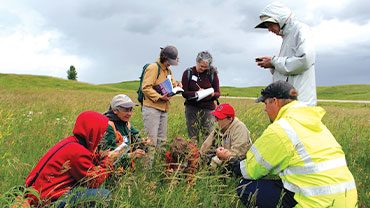
Make a direct equity investment in a social enterprise, Asili, a business that offers clean water, agricultural services, and health clinics to communities in the Kabare region of the Democratic Republic of Congo.
Make a direct loan to Burke Agro, a Nicaraguan company helping small-holder farmers utilize techniques for regenerative farming, purchasing, processing, and selling their products. Further Invest in ReThink Impact, a private equity fund by and for women entrepreneurs in the tech space. This strong-performing investment teaches us that we can find and support a variety of funds and managers.
Make a direct equity investment into Shared-X, a business accelerating Impact Farming companies, and revolutionizing the traditional farming industry by consolidating the value chain and empowering small-holder farmers.
Analyze our investment portfolio to understand its carbon footprint.
Invest in Kuja Kuja, the for-profit spin-off of a nonprofit focused on centering customer and citizen voices in every decision that an organization makes. Further join the Minnesota Council of Foundations Integrated Capital work that produces over $33 million in loans and over $11 million in grants to Minnesota Community Development Financial Institutions (CDFIs).
Learn from cultural CDFls how our loan as well as grant capital can deeply impact wealth building efforts in their communities.
Make our first “integrated investments” of low interest loans and operating grants— $1 million of loan capital dollars and $600,000 in grant dollars to support cultural CDFIs in the Twin Cities.*
Invest in first-time managers to support access to capital for BIPOC and LGBTQ+ communities and women, all grossly underrepresented in the investment and business start-up world. We do this in contrast to many traditional investors that are not willing to invest in unproven managers. Invest in Brown Venture Group, a Minnesota black-owned investment fund and The Coven, a Twin Cities co-working space and online community founded by and for enterprising women, non-binary and trans individuals.
Expand our Investment Committee to include two community members with commitment to community and experience in impact investing. They join three family committee members to embark on creating a framework to guide our impact investing and outcome measurement. We anticipate losses on a small number of our very early-stage investments, noting that the innovation and learning from these investments is great, while we limit the amount of capital at risk given the risk level.
Provide a loan to FRACTAL Agriculture to allow proof of concept prior to first close of FRACTAL FARM Fund along with a commitment to fund.
We acknowledge that we have significant work ahead to continue to align our investments with our values and make positive change with community. We are optimistic and invite others to join us on the path forward.
* African Development Center, African Economic Development Solutions, Latino Economic Development Center, Northside Economic Opportunities Network, MniSota, NeDa Centro, and Land Bank Twin Cities.
Applying the term “impact investing” broadly, we have since 2007 been working to move all of our investment dollars from “doing no harm” to “producing positive social outcomes” for communities. In 2011, we formalized an aspiration to have 100% of investments creating positive impact, while generating the needed financial return for the Foundation to continue serving as a grantmaking as well as investment partner to communities in perpetuity.
We have incorporated impact objectives across the Foundation’s endowment portfolio (versus applying a carve-out), making investment decisions through one Investment Committee and applying the “prudent person rule” to make investments with the care of a prudent person under similar circumstances.
Photo: African Economic Development Solutions
As of December 31, 2023, 86% of Foundation assets were invested for impact. As we move toward 100%, we continue to seek partnerships with diverse and innovative fund managers, founders, and nonprofit organizations that seek capital to advance climate solutions, create quality employment opportunities, increase access to quality education, and grow local economies–all while reducing inequality in access to opportunity and sharing learnings through transparent operations.
We encourage other investors—foundations, families, corporations, and nonprofit organizations–to invest for impact consistent with their missions, values, and geographic priorities. Investing for impact takes time as well as intention, but there is an expanding network of peers, advisors, and other resources available to support the process. As we continue our journey, we welcome collaborators and are pleased to share our history, approach, and learnings.
Photo: Neighborhood Development Alliance Inc (NeDa Centro)

Mary Jo Sanderson is a Global Investment Executive with specialized expertise in portfolio construction and risk management. She leverages extensive industry experience to drive financial innovation and strategic growth. With a sharp ability to identify alpha in complex and evolving economic environments, she applies structured thinking to navigate uncertainty, capitalize on emerging opportunities, and mitigate risk. Committed to fostering collaborative partnerships, Mary Jo develops innovative financial solutions that deliver mutual value to all stakeholders.
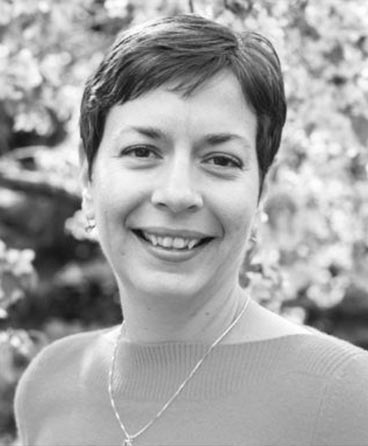
Rochelle Gunn serves as Chief Investment Officer of HRK Group, Inc., a single-family office based in Saint Paul, Minnesota. HRK delivers integrated financial services to 19 fourth- through sixth-generation family members. In her role, Rochelle is responsible for establishing the strategic asset allocation for two global investment portfolios and overseeing all investment activities to support the long-term financial objectives of both current and future beneficiaries. A recognized leader in sustainable investing, Rochelle has guided the family’s adoption of ESG and sustainability-focused strategies, actively contributing to the advancement of ESG and impact investing within the broader financial community. Prior to joining HRK in 2008, Rochelle was a Portfolio Manager at Waycrosse, Inc., a single-family office in Wayzata, Minnesota, where she managed global fixed income and global active equity portfolios.

Alice Mortenson currently serves as chair and president of the Mortenson Family Foundation, established in 1999 by Alice and her late husband, M.A. “Mort” Mortenson, Jr. She has been active for 25+ years at Westminster Presbyterian Church in Minneapolis, where she has served as a Trustee. Alice and Mort founded the Mortenson Center in Global Engineering at the University of Colorado and were founding members of United Way's Century Legacy Society. Alice has also served on the Board of Directors UW Foundation, and in 2005, established The Alice D. Mortenson/Petrovich Chair in Russian History. Alice serves as a Trustee of Macalester College. She also serves on the Foundation’s Investment, Environmental, and International Committees.
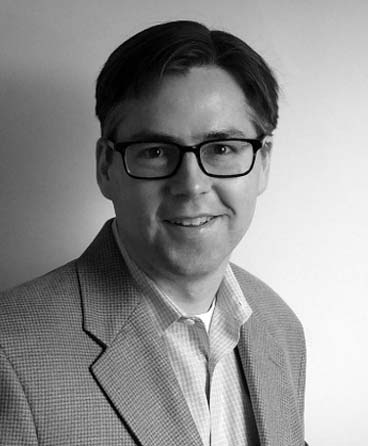
Mathias is the founder and principal of an architectural firm in Minneapolis that focuses on community and the city. His career spans stints with Frank Gehry and Gensler as well as firms in Seattle, Chicago and San Francisco. After returning to Minnesota he spent five years with Mortenson Construction working as an architect’s liaison on the contractor side. He started his firm in 2016. Mathias serves on the Foundation’s Environmental and Investment Committees.
Photo: Asili