Across the Twin Cities, immigrant families are building vibrant neighborhoods, launching businesses, and advocating for healthier futures for their children. But many immigrants and communities of color in Minnesota continue to face disproportionate exposure to environmental hazards, including poor air quality linked to industrial activity and transportation corridors. In the Twin Cities, the highest estimated rates of air pollution-related death and disease are found in neighborhoods with the largest percentage of Black, Indigenous and people of color (BIPOC), low-income and uninsured residents, and people who live with a disability.
Sahan Journal has worked to close that gap through journalism rooted in accountability, cultural responsiveness, and deep community listening. Now, through a new initiative called “Clearing the Air,” Sahan and its partners are helping communities tell their stories while gathering data, building civic power, and shaping environmental solutions themselves.
“Mortenson Family Foundation is honored to partner with Sahan Journal in delivering trusted local journalism that empowers community leadership and advances environmental justice,” says Maryan Abdinur, a community relationship officer at Mortenson Family Foundation. “Sahan’s climate reporting is critical to reducing and repairing environmental harms to restore relationships, communities, and environments.”
Reporting With Communities, Not Just About Them
Founded in 2019, Sahan Journal was created to provide free, fair, and responsive journalism for immigrants and communities of color in Minnesota. The nonprofit newsroom emerged from the recognition that racial disparities affect nearly every aspect of life in the state, from housing and education to healthcare and environmental health. Today, Sahan’s 23-person newsroom reflects the diversity of the communities it serves and approaches journalism as a public service and a platform for civic participation.
Community listening sits at the center of Sahan’s reporting model, and the organization invests in ongoing relationships and culturally responsive engagement. Its journalists regularly host Instagram Live conversations with Latino, Somali, and Southeast Asian community experts to answer questions about immigration policy, public systems, and local issues. Those conversations are then transformed into bilingual resource guides to make critical information more accessible.
The newsroom also experiments with new formats to reach audiences often underserved by traditional media. In 2025, Sahan launched Sahan en Español, a Spanish-language initiative using social media, video, and community partnerships to reach younger Latino audiences. The organization also collaborates with Afghan journalists and community leaders to deliver refugee-focused news in Dari and Pashto languages through text and SMS newsletters.
This commitment to community-rooted journalism has made Sahan a leading voice in environmental accountability reporting. Two years ago, the newsroom became the first media outlet to investigate Smith Foundry, a century-old industrial facility in South Minneapolis that had been violating federal pollution laws for years. Sahan reporters uncovered internal emails showing regulators downplayed residents’ concerns, helping bring public attention to the issue and fueling community advocacy efforts. The reporting sparked demonstrations, intensified pressure on policymakers, and ultimately contributed to the closure of the foundry, a major victory for neighborhood health and environmental justice advocates.
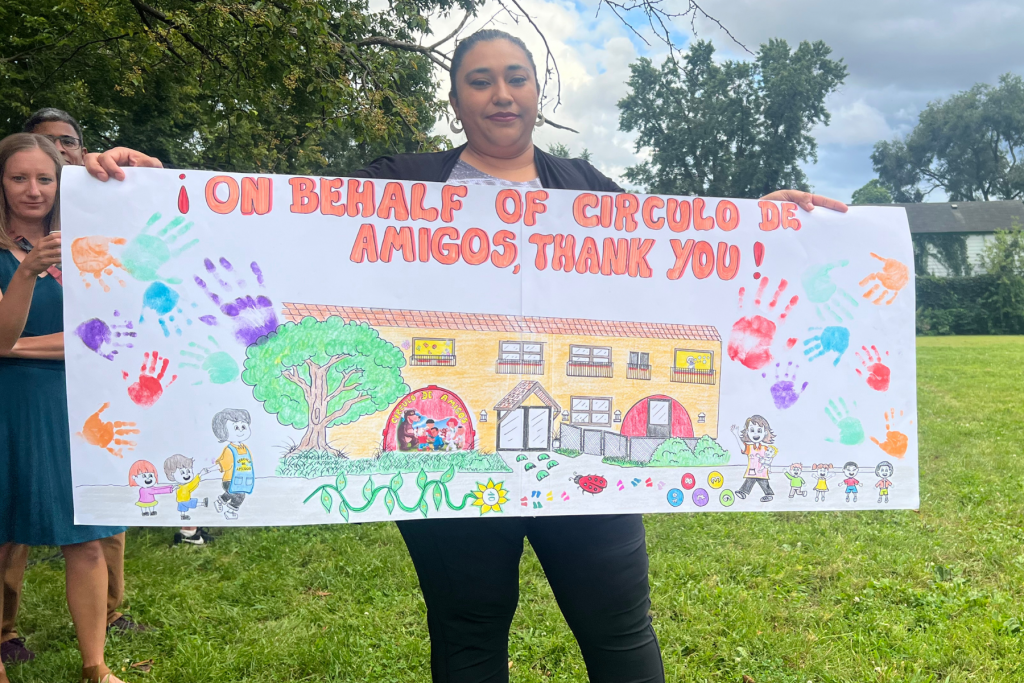
“After sixteen stories, the outcome wasn’t rewarding because a factory closed—it was rewarding because residents who had felt unheard for years finally saw their concerns acknowledged and acted upon,” says climate and environment reporter Andrew Hazzard.
“Clearing the Air” with Citizen Science and Civic Participation
This year, Sahan Journal is launching “Clearing the Air,” a collaborative initiative to help communities better understand and respond to environmental health threats. Developed in partnership with COPAL and Civic Bridgers, the project will equip households in urban areas adjacent to industrial sites with air-quality monitors and train residents to collect and interpret pollution data in their neighborhoods. Participants will also help co-create stories documenting how environmental conditions affect their daily lives, contributing photos, videos, written reflections, and personal testimonials to Sahan’s reporting.
The initiative responds to stark environmental disparities across Minnesota. According to the state’s 2024 Environment and Energy Report Card, 91 percent of people of color live in areas where air pollution exceeds recommended risk guidelines. Latino and immigrant communities are particularly affected because of longstanding inequities in housing, transportation access, and proximity to industrial infrastructure.
“Clearing the Air” is designed to move beyond traditional models of journalism by positioning residents as contributors, storytellers, and civic leaders. Through bilingual outreach and culturally responsive engagement, Sahan and its partners aim to make environmental information more accessible and actionable.
“Communities shouldn’t have to wait for institutions to tell them what they’re experiencing,” says Chao Xiong, Sahan’s director of editorial. “When residents have access to data and the tools to tell their own stories, they build the knowledge and power to advocate for change.”
COPAL, a nonprofit focused on improving quality of life for Latine families, will lead grassroots organizing and community engagement in environmental justice neighborhoods, helping participants install air monitors and document their lived experiences through multimedia storytelling. Meanwhile, Civic Bridgers will expand the project’s statewide impact through Project StoryBridge, which facilitates one-on-one narrative exchanges between people from communities facing similar environmental challenges. Together, the partnership reflects an intersectional approach to environmental justice that recognizes that environmental health is deeply connected to housing, language access, political participation, and community voice.
Looking Ahead
Over the next two years, “Clearing the Air” aims to support more than 30 households using air-quality monitors, generate 500,000 views through community-driven storytelling, and increase public engagement with environmental decision-making processes. The project will strengthen civic agency by helping residents feel more informed, connected, and empowered to advocate for healthier neighborhoods.
At a moment when trust in media and public institutions continues to erode, Sahan Journal is building a different model for local journalism rooted in relationships, accountability, and shared knowledge. Through “Clearing the Air,” communities are not waiting for someone else to define their experiences or solve their challenges. They are gathering evidence, telling their own stories, and helping shape the future of environmental justice in Minnesota.
“Mortenson Family Foundation strengthens Sahan Journal‘s ability to go beyond publishing stories to helping communities make sense of issues that affect their lives,” says executive director Vanan Murugesan. “Alongside our partners COPAL and Civic Bridgers, we will co-create reporting and powerful community solutions that lead to better environmental health.”